"If we had more apartments there, we would lose out on some of these trails."
— Mayor Pro Tem Andrea Peters, quoted in Bucket List Community News
She said that in August, two months after the City Council approved a package that will turn one of Littleton's last open parcels into a restaurant, an event barn, and a public turf field. She was responding to residents who worried the city had just handed millions of dollars to a private company for a piece of land that had sat empty for years. Her point was narrower than that. The land was never staying empty. The only real choice on the table was what got built there, and what came attached to it.
That lot sits at Santa Fe Drive and Mineral Avenue, against South Platte Park and a short walk from the Mineral Station stop on the D Line. Drive past it most weeks and it still looks like dirt and fencing. If the current timeline holds, by 2028 it will be the site of 1st Street Farms.
What's Actually Going Up on That Corner
The project has three pieces, and only one of them is a restaurant in the ordinary sense.
- 1st Street Farms, the restaurant, at 15,000 square feet with five private dining rooms, serving what city documents describe as Southern-inspired, Colorado-focused food, dishes like oysters and shrimp and grits.
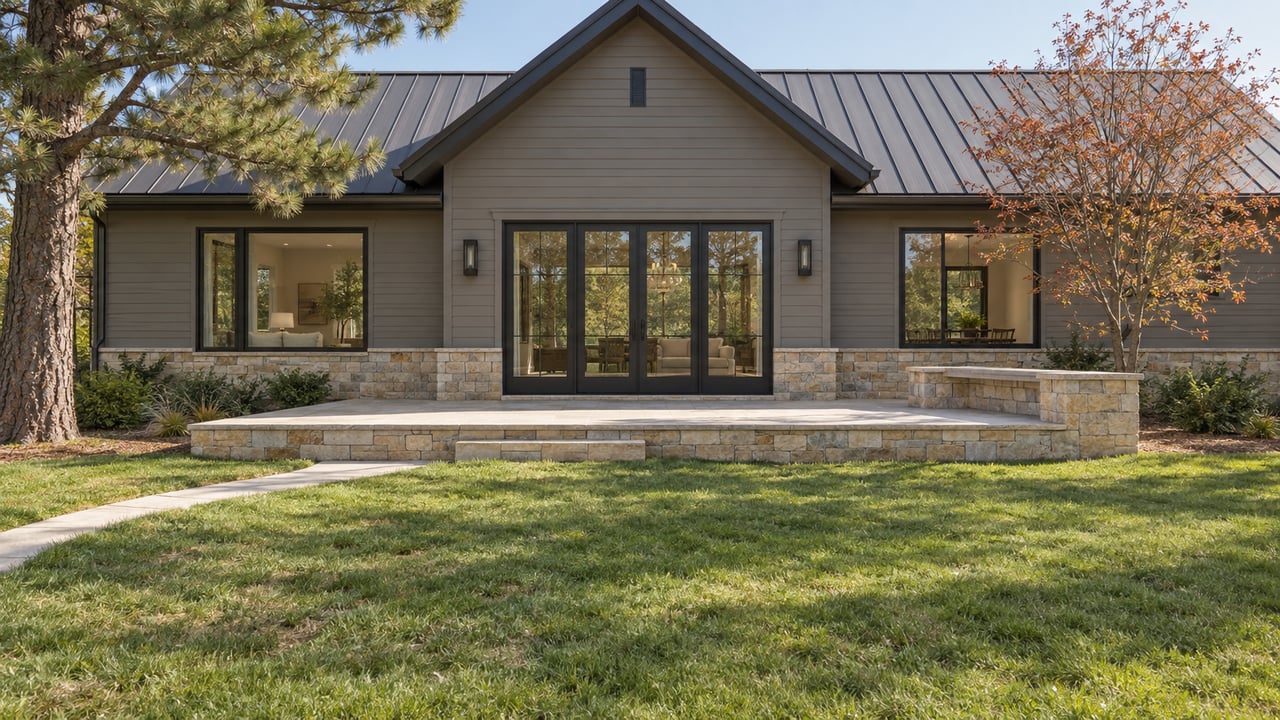
- The Field House, a 13,000-square-foot glass-walled event barn built to hold up to 450 guests, 250 indoors and 200 on the patio, meant for weddings, corporate events, and concerts.
- Little Field, a public turf field named for Richard Sullivan Little, the founder of Littleton, intended for youth sports, school programs, markets, and festivals.
Five acres, multi-use trails, and landscaped gathering space are meant to tie the whole site into the surrounding RiverPark development and connect out to the Mary Carter Greenway. None of that reads like a burger stand. It reads like the kind of park a city usually has to build with its own budget, except this one is being financed by a private hospitality company.
Manning's Name, Not Manning's Money
Most of the early coverage led with Peyton Manning, which overstates his role. City agenda documents from an April council meeting describe what he actually is: a minority equity partner whose involvement is for promotional activities and for the use of his name, image, and likeness. No building in the plans carries his name. The company actually building and running 1st Street Farms is Gastamo Group, a Denver hospitality firm founded by Jean-Philippe Failyau in 2009 and led by CEO Peter Newlin, the same team behind Park Burger and Homegrown Tap & Dough. Manning's contribution shows up in the concept and the menu. The project takes its name from the street he grew up on, and its Southern flavor pulls from his New Orleans upbringing and his college years in Tennessee. The equity and the operating risk belong to Gastamo.
The Trade the City Actually Made
Here is where the deal gets more specific than "the city gave a restaurant company money." The $28 million project had a $5.5 million funding gap once construction costs on the site came in higher than expected, and the council closed that gap with a package capped at a net present value of $5.5 million: a $2 million loan carrying 5.28% interest, a rebate of 100% of the sales tax the project generates for up to five years, and roughly $93,000 in waived development fees. The $2 million is sourced from business use tax revenue, meaning taxes on construction materials and development activity, not the general fund.
The detail that matters most for anyone who walks or bikes that stretch of the Greenway is how the loan gets repaid. Reimbursements are restricted to contractor and supplier payments for public-facing upgrades, specifically trails and turf fields, and the money goes out at set construction milestones. The city isn't trusting Gastamo to build public trail connections and a public field as a courtesy. The financing is structured so the loan only gets satisfied as those specific public pieces get built.
Staff also ran the counterfactual. If the deal had failed, the backup plan for the property was 270 townhomes, since Evergreen Devco, run by CEO Tyler Carlson, had townhome plans for the property, and no buyer had taken it before Gastamo came along. The restaurant project's independent projection puts city sales tax revenue at roughly $750,000 a year by year six, with a cumulative fiscal impact of $7.8 million through year 30 in today's dollars. Whether that projection holds or not, it was the number the council weighed against 270 units of housing with no trail or field attached.
Why Three Votes Went the Other Way
The council approved the package 4-3. Mayor Kyle Schlachter, along with council members Merrill Stillwell and Robert Reichardt, voted against it, and their objections were mostly about deal structure rather than the project itself. Schlachter has said he isn't opposed to the development, just to some of the terms, and that the city has other funding priorities, including its Save the Streets program and renovations at the Town Hall Arts Center. Stillwell raised a separate concern about precedent, worried that a low-return, high-risk loan to one hospitality company sets an uneven bar for how the city treats future businesses.
Some of the pushback has been simpler than deal structure. A handful of residents have asked publicly whether this stretch of Santa Fe needs another large-scale restaurant and event venue so close to an existing destination like Breckenridge Brewery. That's less a fight over financing and more a question about whether the market can support what's coming, which nobody will really know until the doors open.
What Changes Near the Trail Before 2028
Construction is expected to start this fall and take about two years, putting the opening somewhere in 2028. For that stretch, the corner stays an active construction site next to a park that carries real trail traffic. South Suburban Parks and Recreation District has counted more than 300,000 trail users a year within South Platte Park alone, most of it moving along the Mary Carter Greenway that runs past this exact corner.
That's not the only infrastructure project touching this quarter mile. South Suburban has separately been studying a replacement for the pedestrian bridge that carries the Greenway across the South Platte near Mineral Avenue, a project with its own design timeline that has nothing to do with 1st Street Farms. Anyone who uses that crossing regularly should expect two unrelated sets of construction fencing in the same general area over the next couple of years, one tied to a restaurant company's build schedule and one tied to a parks district's bridge study.
The lot at Santa Fe and Mineral was going to get built on regardless of how the council vote landed in June. Evergreen had owned it since 2017 with zoning ready for townhomes the moment the restaurant deal fell through. What the city actually negotiated for, through a loan structured around milestone trail and field construction, was which version of that development includes the parts residents get to walk into for free.
Lynn Marie Baxter keeps an eye on projects like this one because they shape how a corner of town functions long after the ribbon cutting. If you're curious how the build-out near South Platte Park might change day-to-day life in that pocket of Littleton, reach out and ask.